
Ola Electric on Wednesday said it has commenced deliveries of its S1 scooters. The company said it organised special events in Bangalore and Chennai on Wednesday to deliver both S1 and S1 Pro trims to the first 100 customers. "Today is a landmark day for those who have joined the revolution with us as we begin our deliveries of Ola S1. "We are working hard to ramp up the production at the Ola Future factory to get the scooters in the hands of our customers as per their delivery windows," Ola Electric chief marketing officer Varun Dubey said in a statement.

A new generation of investors has taken to stock trading on mobile phones with a renewed zeal, driven mainly by social changes after the Covid-19 pandemic breakout. The proportion of the cash market turnover ascribed to mobile phones has jumped from 5.3 per cent in June 2019 to 18.7 per cent in June this year, reveals BSE data. The share of mobile trading on the National Stock Exchange (NSE) for June this year stood at 19.5 per cent.
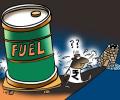
If the reforms are implemented, multi-brand retail majors such as Future Group and Reliance Retail might enter the fuel retail space.

Buy from an established agent rather than a novice who may not be around when you need his assistance.

At the moment Concor, a public sector company controlled by the railways, has a monopoly in running container trains across the country. It offers ferrying rates to carry containers that are one-third of that on roads.

The cutback on export credit refinance facility is another step towards a shift away from sector-specific liquidity allocations.

'India has formed tremendous resilience and still a strong growth.'

'I hope the trend is sustainable and that economic activity accelerates going forward.'

Come October, life insurers may have to tighten their underwriting standards further for retail term plans at the behest of one of the largest reinsurers in the Indian insurance market, Munich Re. According to a source aware of the development, "Munich Re has been studying long-term mortality trends for the past few years, and has suggested some tightening in the underwriting process." "As far as financial underwriting is concerned, the reinsurer has suggested that insurers should ask for additional documents. "For example, apart from income proof, they can ask for bank statements of the prospective customer before issuing policies," added the source.

Ajit Mishra, vice president, Research, Religare Broking, answers your queries.

'Rather than experimenting with CBDCs, we must come up with a very simple and straight design.' 'Dematerialise your currency/cash and with that dematerialised rupee allow all the transactions digitally.'

Amazon's rivalry in India with oil-to-retail conglomerate Reliance Industries looks set to head to the cricket field, where they will likely battle media heavyweights for telecast rights to the Indian Premier League (IPL) with its hundreds of millions of viewers.

'The competition between the two is definitely going to be of great interest to the Indian market.'

AI and machine learning will only continue to grow in 2022, with a significant increase in the demand for such roles, notes Sekhar Garisa, CEO, Monster.com.

Shoppers Stop plans to open five or six department stores and 10-12 beauty stores this year

Equity indices chalked up losses for the second straight session on Monday, in tandem with a bearish trend overseas as ratcheting up of hostilities in Ukraine and prospects of further rate hikes by the US Fed soured global risk sentiment. The rupee slipping to another all-time low against the US dollar amid foreign fund outflows added to the gloom, traders said. After tumbling over 800 points in intra-day trade, the 30-share BSE Sensex clawed back some lost ground to end 200.18 points or 0.34 per cent lower at 57,991.11.

Billionaire Mukesh Ambani's Reliance Industries is reported to have held talks with Saudi Aramco on a cash and share deal for sale of a 20 per cent stake in its oil refining and petrochemical arm. Ambani had in August 2019 announced talks for the sale of a 20 per cent stake in the oil-to-chemicals (O2C) business, which comprises its twin oil refineries at Jamnagar in Gujarat and petrochemical assets, to the world's largest oil exporter. The deal was to conclude by March 2020 but has been delayed for reasons not disclosed by either company.

RRVL will make an open offer to acquire up to an additional 2.17 crore equity shares of Just Dial, representing 26 per cent stake, in accordance with Sebi Takeover Regulations, a regulatory filing said.

Despite strong AUM growth, MFs lag behind other popular investment avenues. MFs received only 6 per cent of total household savings in 2021-2022.

Starting with the third quarter of financial year 2020-21 (Q3FY21), we have seen "unlock" trades at various times. Whenever lockdowns have been eased, traders have taken long positions in consumer-facing businesses. Let's look at the logic. Since March 2020, sectors like retail, personal vehicles, hospitality, aviation, fast-moving consumer goods (FMCG), multiplexes, etc., have been under severe pressure. As a result, there's been a low base effect. Every company in these spaces has suffered top line contraction. Many suffered losses, especially in the first half of FY21.

Industries with the highest number of top-rated companies at risk were hospitality/travel, media and entertainment, retail, financial services and consumer goods/manufacturing
We can be cash positive in no time, the day we decide to slow down investments

If your flight is cancelled or delayed or you miss one, a travel insurance policy can cover the costs at such times and help you book a new one.

The Consumer Price Index hit the lowest in six months in March at 4.83 per cent.
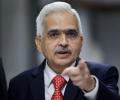
Reserve Bank Governor Shaktikanta Das on Wednesday said underlying economic activity in India continues to be strong, but external factors will cause some "dent" to the economy. Speaking at the BFSI Insight Summit 2022 organised by Business Standard, Das said the RBI tracks 70 fast moving indicators and most of them are in the "green box". It is the external sector, mired by a fear of recession or clear visibility about slowing growth in a large part of the world, where the challenges lie, he said, adding that the impact of external demand will "dent" the economy.
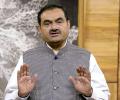
Embattled billionaire Gautam Adani on Thursday spoke publicly for the first time since his ports-to-energy conglomerate publicly battled a short seller's accusation of stock manipulation and accounting fraud, saying the abrupt move to withdraw a fully-subscribed share sale at his flagship firm was due to market volatility. His group continued to lose on the stock market, with the cumulative rout now nearing $108 billion in a week -- one of the biggest wipeouts in India's history. "After a fully subscribed follow-on public offering (of Adani Enterprises Ltd), yesterday's decision of its withdrawal would have surprised many.

Petrol and diesel prices are likely to be hiked this week as oil companies prepare to pare losses accumulated from keeping rates steady for over four months in the run-up to assembly elections in five states, including UP, despite international oil prices jumping to a 13-year high of $140 per barrel. West Texas Intermediate crude futures, the US oil benchmark, rose to $130.50 per barrel on Sunday evening, its highest since July 2008, before retreating. The international benchmark, Brent crude, hit a high of $139.13 at one point overnight, also its highest since July 2008.
